
Quick Overview
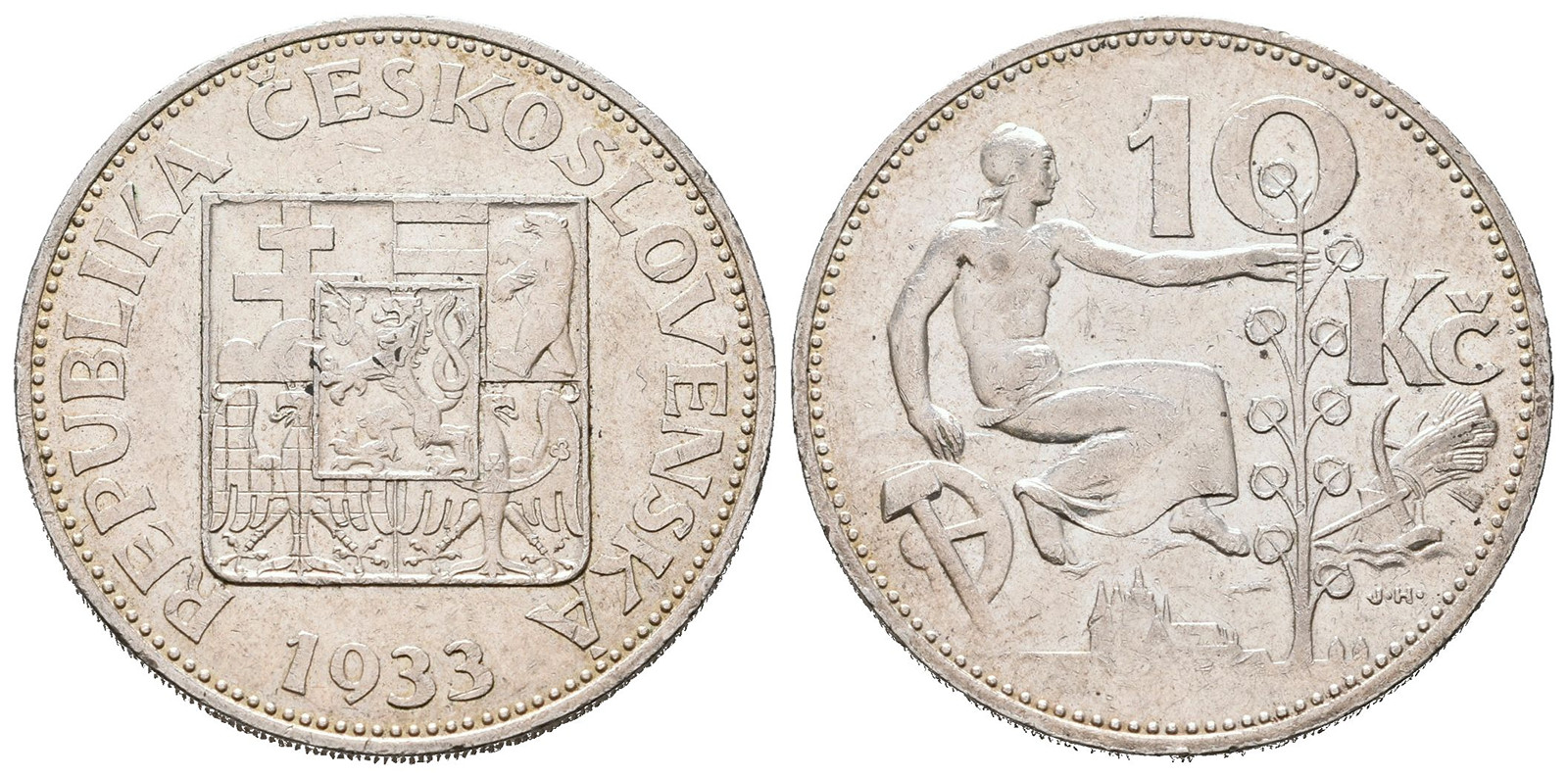
The silver ten-crown coin with the year 1933 is the rarest date of the entire 10 Kč 1930-1933 series. Officially, 915,000 pieces of ten-crown coins were supposed to be minted in 1933 – exactly the number needed to reach the planned ceiling of 25 million coins. However, when the Kremnica Mint was finishing the last batch on January 7, 1933, a large portion of the "surplus" ended up among the so-called culls (scrap coins) and never left the mint's gates. This, along with the later melting of unused stock, explains why today's estimates speak of only a few thousand pieces in any condition.
Therefore, auction prices are rising. Below you'll find detailed technical parameters, the backstory of its complex origin, distinguishing features of a genuine piece, and practical contacts if you might have such a rarity at home.
1 | Why is the 1933 date so rare?
Interesting fact: The production ledger used "letters" A–E; each letter represented six melts of ~280 kg of silver alloy. The record tracked the material weight, not the number of pieces – the date on the metal was rather secondary for the accountants.
| Key Moment | What Happened |
|---|---|
| End of 1932 | The mint had already produced at least 208,000 ten-crown coins with the same dies, but without approval for shipment. |
| Jan 2–7, 1933 | The final test minting takes place; the diary mentions five thousand pieces extra, which ended up in "culls" (defective scrap) and never reached the bank. |
| Summer 1933 | The Ministry of Finance reduces the total limit for silver ten-crown coins to 25 million pcs and cancels further minting of the 1933 date. |
| 1934–1939 | Silver from unneeded 10 Kč coins is remelted for other denominations; surviving pieces mainly come from the mint's internal collections. |
2 | Technical Parameters & Artistic Details
| Parameter | Value |
|---|---|
| Metal / Purity | Ag 700/1000 + Cu 30 % |
| Diameter | 30 mm |
| Weight | 10 g |
| Edge | Fine reeding |
| Author | Jaroslav Horejc |
| Official Rarity | RR (under 10,000 pcs) |
Why did the dies suffer more than usual?
High relief – The knee of the allegory and the crown of linden leaves required pressure at the very limit of the machines; the pearl border is often weak.
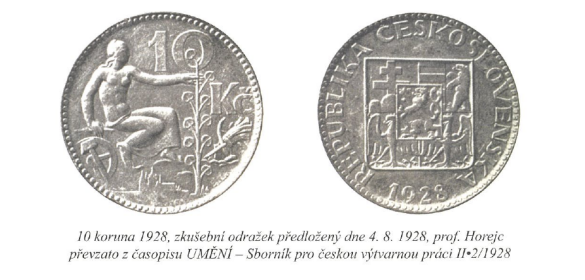
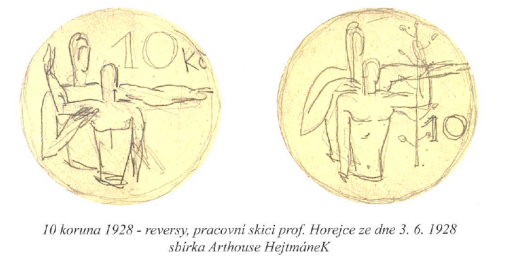
Uneven load – Horejc had to lower the relief seven times before the mint agreed.
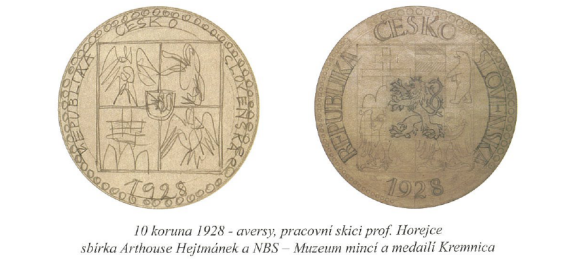
Minor heraldic adjustment – the Ministry of the Interior at the last moment requested that the Silesian eagle face left, which meant reworking the entire central coat of arms.
3 | How many pieces actually survived?
-
915,000 pcs – official minting plan for 1933
-
≈ 210,000 pcs – documented minted and sorted by Dec 31, 1932, still at the mint
-
5,000 pcs – last "surplus" placed among defective coins (culls) on Jan 7, 1933
-
Today's collector estimate: 3,000–5,000 pcs in any condition, only a few hundred UNC pieces.
4 | Original vs. Forgery – 60-Second Check
| Criterion | What to watch for |
|---|---|
| Number of Pearls | 96 on the obverse, 101 on the reverse – copies may not match exactly |
| "J H" Detail | The author's mark at the base of the sheaf is shallow but precise; on late fakes it's blurry. |
| Material | Ag 700/1000 alloy |
| Magnet | The original is non-magnetic – any reaction to a magnet signals foreign metal. |
5 | Investment Potential
-
Low surviving number – among First Republic silver coins, the 10 Kč 1933 is an icon.
-
Strong story (technical difficulties, mass melting, "secret crate" in the mint) adds a premium to the coin.
-
Not correlated with the price of silver like common dates 10 Korun 1930 - 1932 – the numismatic component constitutes > 99% of the value.
6 | Do you want the coin appraised or to sell it?
Aurea Numismatics (www.aurea.cz) – specialists in Czechoslovak rare dates.
-
Free online consultation
-
Inclusion in an international auction on LiveBid.cz.
Literature: HAVEL, Radek. Annotated Catalog of Czechoslovak and Czech Coins 1919 - 2019. Humpolec 2019
We are here for you – get in touch
<