
Our team includes experts on historical coins, medals and banknotes, ancient coins and everything around them. 25 years with you.
We will gladly answer all your questions. We either purchase coins and other collectable material or take it in for auction.
Identification of coins, medals and banknotes; determining origin and date of minting.
Market valuation of single pieces or entire collections — for sale, inheritance or insurance.
Expert authentication of material by experienced numismatists.
Written expert opinions as required — for legal, court or internal purposes.
Representing clients in sales and purchases at auctions at home and abroad.
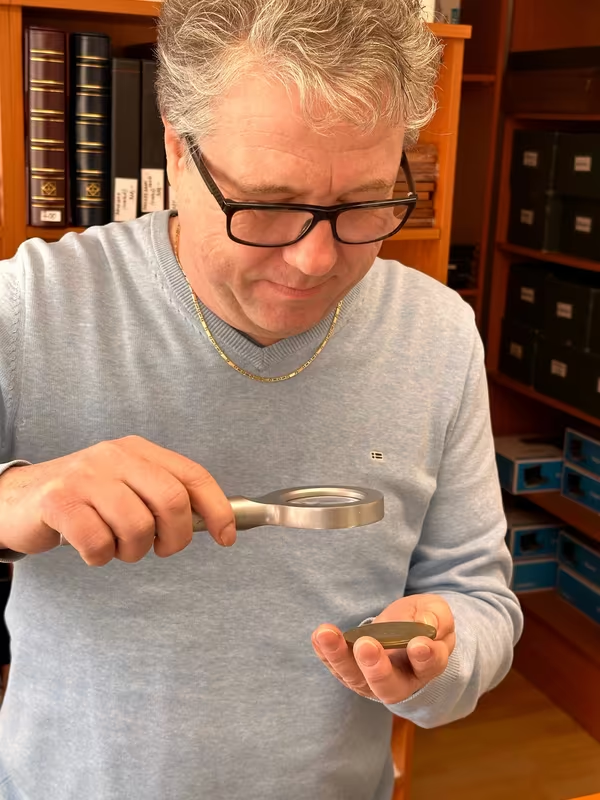
Hodnota mince se určuje podle několika faktorů. Mezi ně se řadí stáří mince, kov, ze kterého je vyražena a náklad (vzácnost). Množství typů a nominálů mincí je rozsáhlé a existují tak i tisíce let staré mince se zanedbatelnou hodnotou. Naproti tomu jsou i moderní mince, o které je mezi sběrateli velký zájem. Bližší informace naleznete v našem článku nebo nás kontaktujte. Rádi Vám se vším pomůžeme a zodpovíme jakékoliv další dotazy týkající se tématiky. Jak nás kontaktovat? - Klikni zde
Jedná se o proces hodnocení stavu mincí a medailí nezávislými odborníky (např. NGC). Tento proces zahrnuje posouzení pravosti, zachovalosti (Sheldonova stupnice 1–70) a uložení mince do trvale zapečetěného plastového pouzdra (slabu) s unikátním kódem. Tím je zaručena originalita, ochrana před poškozením a snadnější obchodovatelnost. Více o NGC Certifikaci
Cena za NGC grading začíná od 900 Kč u standardních mincí s hodnotou do 300 €. Záleží na tržní hodnotě mince, kovu a případně historickém původu (např. antika). Celý proces trvá zhruba 3–6 měsíců. Náš aktuální ceník najdete v odkazu níže. Ceník NGC gradingu - Klikni zde
Odborný posudek na mince můžete získat doručením mincí na naši prodejnu, kde je posoudí naši odborníci s mnohaletou zkušeností. Dáme Vám na něj razítko a zatavíme Vám ho. Posudky od Nás jsou uznávané pro pozůstalost; dědické řízení; rozvodová řízení. Pan Ing. Veselý má přes 40 let zkušeností a podepisuje se nejen za firmu, ale i za sebe. Ve formuláři zvolte možnost "Posudek"
Nejstarší mince na světě vznikly v oblasti malé Asie v dnešním Turecku. Na území tehdejší Lýdie došlo k ražbě zlatých mincí z kovu zvaného elektrum (slitina stříbra a zlata). Tato mince zobrazuje majestátní lví hlavu směrem doprava s otevřenou tlamou. Ražba těchto mincí byla podmíněna rozvojem obchodu v oblasti malé Asie. Podobně stará jsou Čínská předmincovní platidla zvaná "Spade Money" lité z bronzu. Vyráběny byly ve formě předmětů jako např. nůž nebo klíč.
Postup při výkupu mincí zahrnuje: Mince převezme odborník na numismatiku, který ji určí a následně ocení. Na základě ocenění se dohodnete na nabídce za danou minci. Po dohodě Vám bude vyplacena částka Vámi preferovaným způsobem.
Tato speciální varianta vznikla jako zkušební ražba v limitovaném počtu pouhých 1 000 kusů. U běžné desetikoruny protíná linka písmeno "Kč" zhruba uprostřed. U vzácné varianty "malé Kč" je písmo subtilnější a linka protíná písmeno mnohem výše. Tato unikátní mince může dosahovat na aukcích statisícových částek, na rozdíl od standardní desetikoruny 1993, které je v oběhu 70 milionů. Fotografie a detailní rozpoznávací znaky
Nejcennější bankovky zahrnují: 1. Vzácné historické bankovky: Bankovky vydané v omezeném množství nebo s historickým významem. 2. Chybové bankovky: Bankovky s chybným tiskem. 3. Bankovky s unikátními sériovými čísly: Bankovky s nízkými nebo speciálními sériovými čísly.
Hodnota bankovky závisí na jejím stáří, vzácnosti, stavu (grading), nominální hodnotě a poptávce mezi sběrateli. Může být užitečné porovnat bankovku s podobnými kusy na aukcích a v katalozích. Využít můžete náš archiv, nebo nás pro bližší informace kontaktovat.
 More FAQs
 With coins, unlike other antiques, a coin that is 200 years old is still considered a fairly modern strike. Coins have been minted for over 2,000 years; the metal is durable, so an old coin is not hard to obtain, even at a reasonable price. We also sell such old Greek and Roman coins in our shop. The rule "the older, the more valuable" therefore does not apply.
The layman's assumption that gold coins are the rarest, and small bronze or copper ones the least valuable, does not hold. The metal only hints at which category a coin might fall into; the price is set mainly on the basis of other criteria.
As in other fields, with coins and banknotes the better the state of preservation, the higher the price. Even a very common coin in flawless condition is usually valued more than a rare coin in poor condition.
The rarity of coins, medals or banknotes is determined by the number of pieces struck and, above all, by the number that have survived and are available on the collector market. Clearly, where supply is large and collector demand small, the price is low; where supply is small and demand high, the price is high.
Further criteria seem unrelated to coins and other collectable material, yet they sometimes affect the price considerably. Chief among them are collector popularity and the economic situation of collectors and of the economy as a whole. The most collected coins are the most accessible and best known to us — coins of the Czech Republic and Czechoslovakia, and then coins that historically circulated in our territory. A common Franz Joseph coin sells better than, say, a rarer coin of Bolivia or Cameroon. It should also be noted that the popularity of collecting particular coins often shifts, and prices shift with it.
The price is set taking all five criteria above into account, drawing on many years of experience and regular monitoring of the collector market. The idea that you can simply buy a catalogue and find it there, or the naive notion that you can find it online, is entirely mistaken.
In general terms, valuable coins are those that are old, rare, very well preserved and in demand. Frankly, I have not seen many of those. The least valuable, by contrast, are common coins in poor condition that few collectors seek — and unfortunately these make up the majority. All other coins fall somewhere in between, and it is quite hard to weigh up every factor accurately even for an expert, let alone for a layman.
Here are a few of the most common coins that have survived in almost every family. You may well pass them on to a beginning collector.
Maria Theresa
Francis II
Franz Joseph I
Czechoslovakia